What is C.O.P.D?
C.O.P.D. is an umbrella term used to describe progressive lung disease. This includes emphysema, chronic bronchitis and non-reversible asthma. The disease is characterised by increased breathlessness. It is a common condition effecting mainly the middle-aged or older adults.
Breathing problems tend to get worse if untreated. The main symptoms are breathlessness when you are active, a persistent chesty cough with phlegm. You may have suffered from recurrent chest infections; your chest may sound musical (wheezy). Some patients develop signs of hyperventilation and need help to overcome this.
Our aim as physiotherapists is to offer patients assistance in breathlessness management and symptom control. We want to improve function and mobility, assist with airway clearance and cough enhancement or support. See our Services.
Techniques we use are:
Exercise prescription.
Positioning and breathing techniques.
Airway clearance.
Assistance with postural and/or musculoskeletal dysfunction and pain.
Continence assistance.
Delivery of pulmonary rehabilitation.
Non-invasive ventilation.
We are also experienced in oxygen prescription and nebuliser therapy.
Positioning Recommendations.
- Advise on shoulder girdle fixing for optimising ventilatory muscle efficiency so relieving breathlessness.
- Showing the use of the forward leaning sitting position for breathlessness. Also in standing, for example resting hands in pockets or on belt loops.
- Modified gravity-assisted positioning with the consideration of percussion and chest wall vibrations.
Breathing techniques recommendations.
- Breathing control at rest.
- Purse lip breathing during exertion as a strategy to reduce dyspnoea.
- Teaching slow, deeper breathing.
- Teach paced breathing.
Managing Anxiety and panic.
This is very much discussed with the individual. There are relaxation strategies to help manage anxiety and panic attacks.
Airway Clearance techniques.
We use the active cycle of breathing techniques. This includes the forced expiration technique, autogenic drainage, oscillating positive pressure for patients with stable COPD.
Pelvic Floor Training.
All patients with respiratory conditions including COPD will be asked about their continence status. Any patient with a chronic cough will be taught Pelvic muscle training.
Respiratory muscle training.
- Inspiratory muscle training will be taught.
- The thoracic spine and ribcage can be assessed and stretches, and manual techniques applied.
Exercise Training.
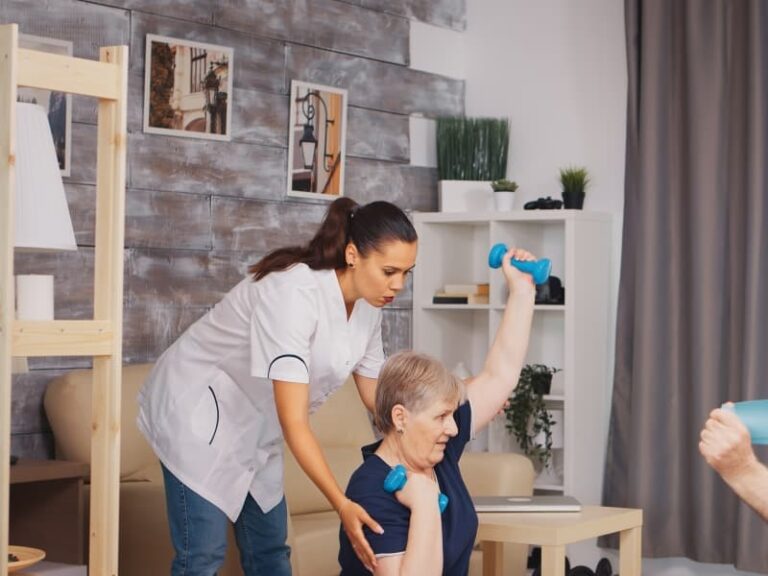
Being active is paramount! Active exercise should be within the individual’s ability to improve fitness and cardiorespiratory performance. Pulmonary rehabilitation includes strengthening of the muscles in the upper and lower body, improving patient’s ambulation.