Respiratory physiotherapy can be defined as the assessment, treatment and support of people with disorders of the respiratory system including their lungs and breathing.
Our physiotherapists have chosen to specialise within this medical field. This is following extensive training in acute and nonactive hospital settings.
Respiratory conditions can have a significant impact on exercise tolerance and independence with everyday activities. Physiotherapy is focused on maximising physical function and helping you to manage your symptoms.
The conditions that we can assist with include:
Chronic bronchitis.
Emphysema.
COPD.
Asthma.
Bronchiectasis.
Cystic fibrosis.
Lung cancer.
Tracheostomy management.
Hyperventilation and breathing disorders including anxiety.
Respiratory physiotherapy is essential before certain surgical procedures and following general surgery. It is also required after severe illness requiring intensive care or high dependency.
Respiratory Physiotherapy Assessment
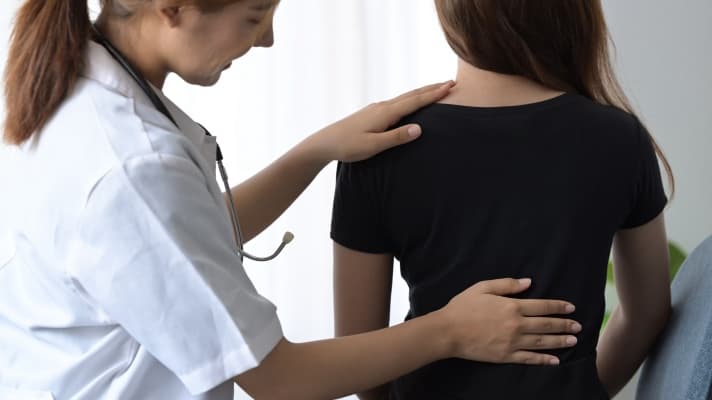
During assessment you will be asked about your symptoms. The physiotherapist will need to see your shoulder girdle, ribcage/chest area, back and stomach area.
A stethoscope will be used to auscultate, we listen to the sounds from within the lungs.
Listening to your chest will assist with our assessment to select an appropriate treatment.
Your sputum (phlegm) will be looked at, below are images of varying sputum types.
We use a number of treatment techniques, some examples are:
Active cycle of breathing exercises that help to remove excess secretions (phlegm) from the lungs. Using different depths of breathing, phlegm can be moved from the small airways at the bases of your lungs. It can be moved to larger airways at the top. This allows it to be cleared more easily through huffing and coughing.
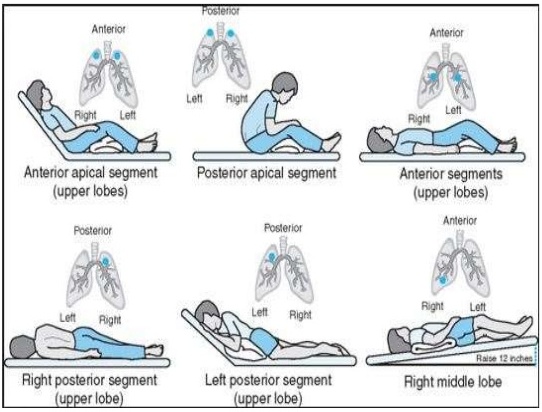
Postural Drainage is a technique used to mobilise large amounts of secretions in people with chest conditions. It relies on the effects of gravity to drain secretion (phlegm) from one or more lung segments into the central airways. Here, it can be removed by huffing or coughing. It is essential for those patients with bronchiectasis and cystic fibrosis.
The Acapella Device
Physical activity this includes passive or active assisted movements to get your shoulder girdle moving as well as to loosen up stiff ribcages. In chronic respiratory patients, mobilisation refers to getting the patient up and moving. By encouraging you to take bigger breaths, it will help you to clear your chest. Air gets down to the bases of the lungs, whilst helping to keep muscles strong and increasing your exercise tolerance. Physical activity can either outside or around your home.
Different equipment such as incentive spirometers, Acapella, cough assist devices may be recommended. Education and advice on self-management is part of our role.