When we have a loved one who has been in hospital or had an illness, whether that be a heavy cold or a surgical intervention what do we say to them? ‘stay in bed’, ‘rest in the chair’. The effects of inactivity are great and impact older people both in hospital and in their own home. Yes! Deconditioning is happening in your own home.
Studies have shown that patients can be 98% sedentary whilst in hospital. This percentage does reduce once home and activity picks up. A person can go into hospital breaking their arm but the lack of activity during their hospital stay causes them to go home deconditioning; unable to function as they did prior to their accident. Another study looked at a rehabilitation settings/centres over the weekend and found that patients on average took 12 steps during the whole weekend! This is totally shocking. On average you should be walking 10 000 steps per day.

Image Copyright Sonia Sparkles. Permission granted to use.
What is the impact of bed rest?
- Muscle strength decreases by 1-1.5% per day of inactivity in the first week
- Muscle mass is lost (1.5kg) 1kg is lost from the hips/gluteal muscles these enable standing
- Bone demineralisation and loss of total body calcium occurs 6mg/day
- The circulating volume decreases up to 5%, heart rate will increase by one beat each day
- There is a decrease in all lung function parameters leading to thickening of sputum/mucus, inefficient cough and an increased risk of pneumonia. The reclined position in bed does not allow lung expansion
- Blood glucose changes by the 3rd day of inactivity, reduced insulin. This takes 2 weeks of activity to return to normal
- V02 max reduces by 0.9% per day- this is the maximum amount of oxygen than can be used during intense exercise. It is the best indicator of cardiovascular fitness, you may have this measured before going for a hospital procedure.
- Constipation due to reduced peristalsis (wave like movements made in the intestine) reduced fluid intake. There is no gravity effect on the bowel either
- UTI/urinary infection as a result of diuresis and changes of minerals/electrolytes leading to kidney stones.
- Skin integrity is compromised leading to pressure sores
- Lethargy
- Loss of motivation
- Torpor (mental and motor inactivity)
- Loss of independence
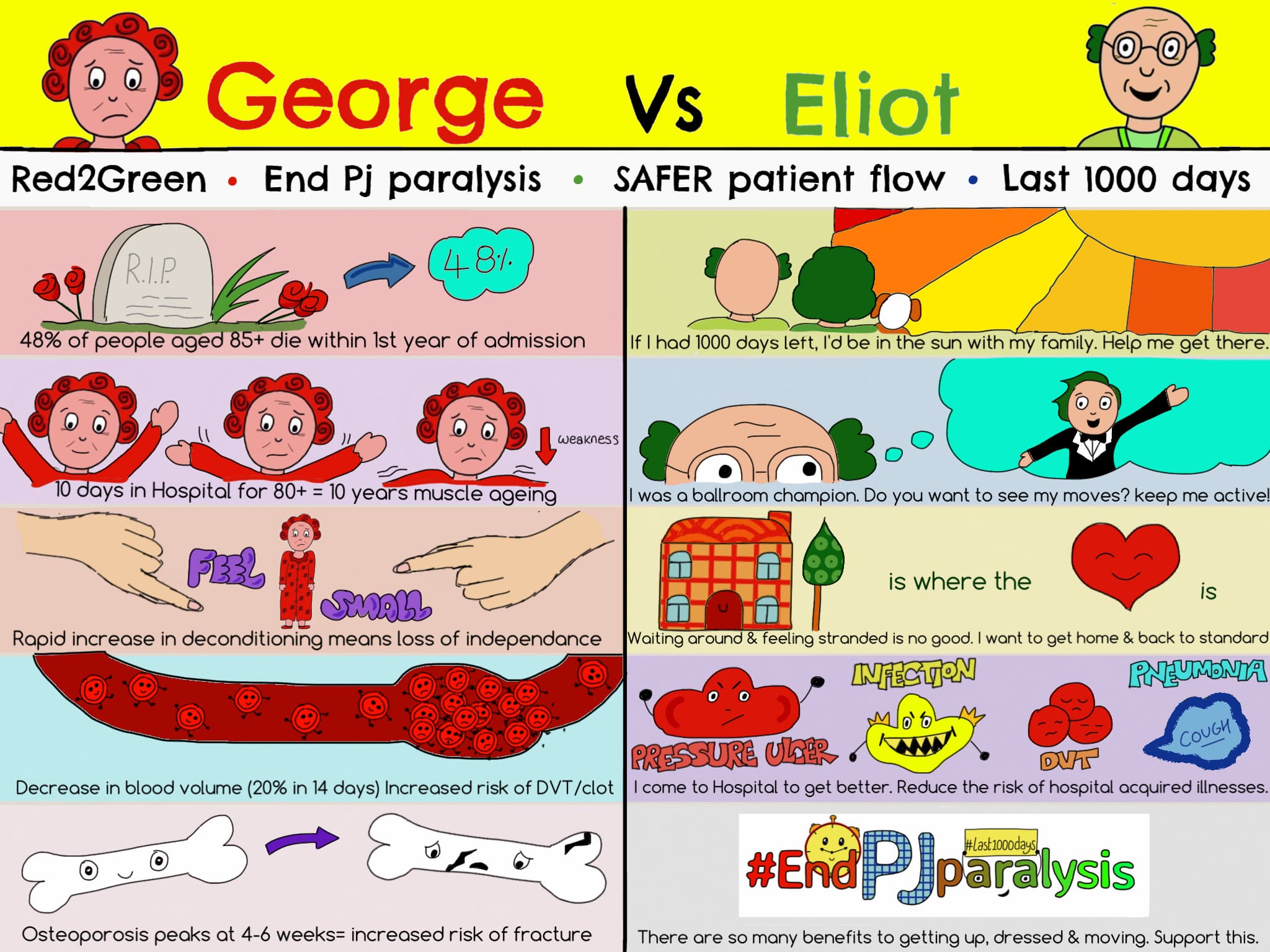
Image Copyright Sonia Sparkles. Permission granted to use.
As you can see bedrest causes damaging effects on our bodies and sometimes it is too late to make changes. Fewer hospitalised patients would die if their mobility was improved within the first 48 hours of admission. 30% of acute inpatients are in their last year of their life. Inactivity is stealing patients’ precious time; time is the most important currency.
The effects of bedrest are not limited to the hospital. These effects are occurring in peoples’ own homes.
To be assessed by a physiotherapist and learn how you can become more active contact 01245 377118.

Image Copyright Sonia Sparkles. Permission granted to use.