Parkinsons
Parkinsons is a progressive neurological condition which presents with motor/movement dysfunction. It is divided into the Idiopathic type and Atypical condition.
Treatment provides symptomatic benefit. There is no treatment shown to slow the disease. It is not hereditary.
Main problems:
- Slowness(bradykinesia).
- Stiffness(rigidity).
- Tremor.
- Shuffle gait.
- Poor posture.
- Soft voice.
- Loss of smell.
- Postural instability.
- Difficulty performing daily tasks.
- Cessation of movement called freezing/freezing of gait (F.O.G).
It tends to start on one side of the body, but eventually takes over the whole body.
Drugs such as Levadopa stimulate dopamine, this causes a dramatic positive effect when the disease is at its mild stage.
Tasks that may be affected:
- Handwriting.
- Memory.
- Salivation.
- Cutting food.
- Turning in bed.
- Swallowing.
- Getting dressed.
- Multi tasking such as brushing teeth, moving the brush up/down plus moving it horizontally.
More common atypical types of Parkinsons are as follows:
Multi systems atrophy (MSA).
Progressive supranuclear palsy (PSP).
Cortical basal degeneration (CBD).
Dementia with Lewy bodies (DLB).
Physical Activity
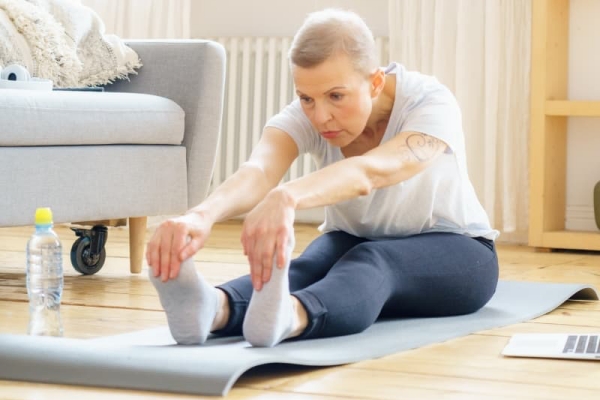
It is most important that regular physical activity is undertaken. Once you have been assessed by your physiotherapist you will be left with exercises to do daily.
Common exercise forms:
- Function for example sit to stand. This is easily completed in the home.
- Endurance – Boot Camp style training, Running, Jogging, cycling or vigorous walking.
- Flexibility – Yoga.
- Postural exercises – Yoga again is beneficial.
- Strength/resistance – Pilates style exercises.
- Balance retraining – all forms of dance are great for balance.
- Co-ordination – Racket sports, dance, aerobics, Zumba
- Relaxation – Yoga, Tai Chi.
There are many forms of exercise to tackle each requirement. As you can see, Yoga in particular ticks several boxes – flexibility, relaxation, balance. Dancing, in all its forms, is very beneficial too. However, you needn’t pay out for exercise participation because many of these exercises are free; running, jogging, walking, dancing, sit to stand.
The Parkinson’s society is a good reference point for information. The exercise framework can be accessed here.